Impressions from Interspeech 2026 in Sydney
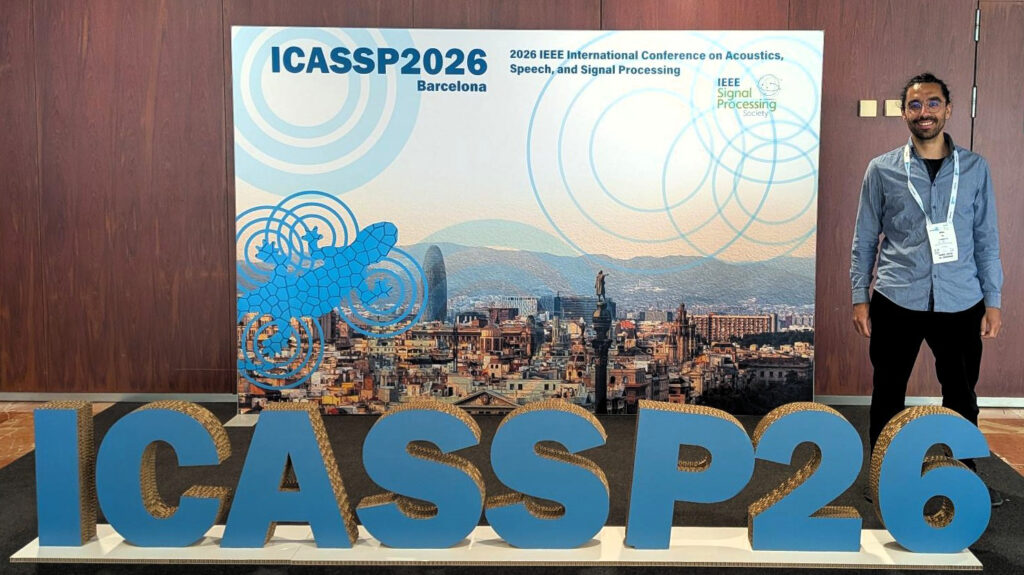
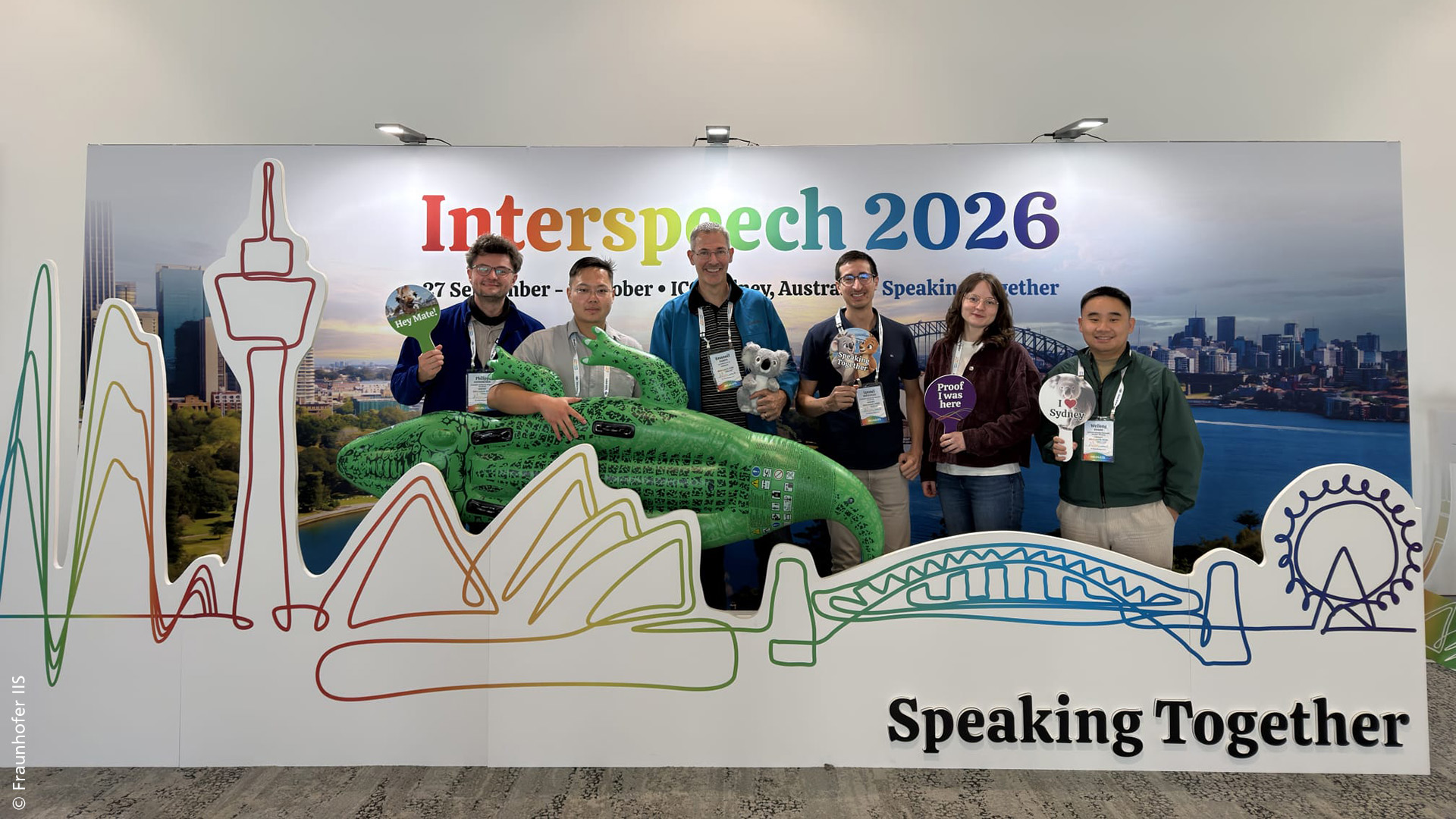
At the end of September, two members of the DSgenAI project, Lyonel Behringer and myself, travelled to Sydney and got the opportunity to attend Interspeech 2026. As one of the world’s largest conferences on speech and language technology, Interspeech brings together researchers and practitioners working on topics ranging from speech coding and artificial intelligence to linguistics, human communication and language processing.
Presenting research from DSgenAI
For us, the conference was an opportunity to present two papers developed within the DSgenAI project: Both contributions focused on the evaluation and practical use of speech codecs – technologies that compress speech for efficient transmission.
Ensuring speech intelligibility in noise
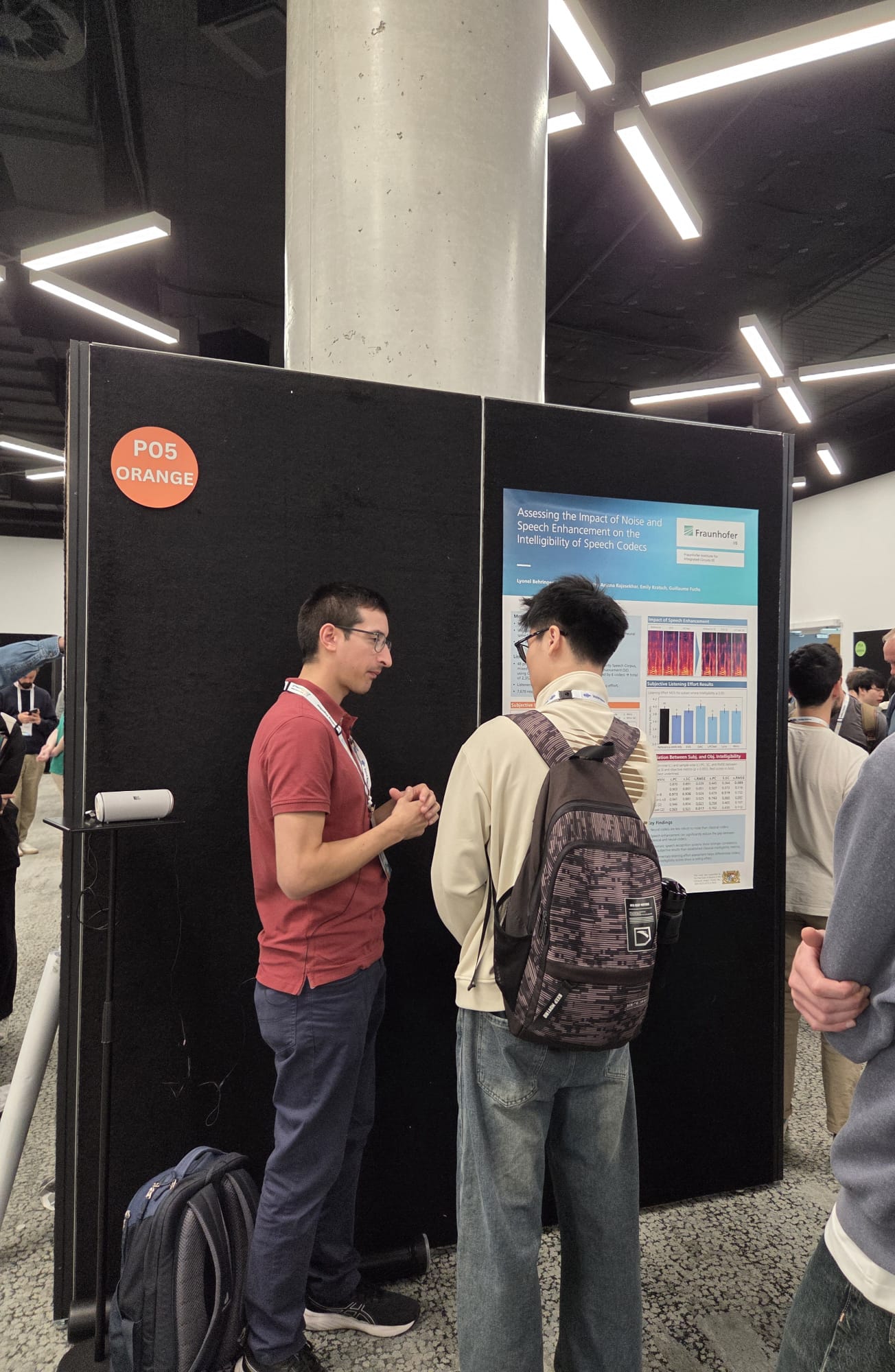
Lyonel’s research focused on the effects of background noise and speech enhancement on the intelligibility of speech codecs. The results showed that traditional speech codecs are generally more robust in noisy environments than neural codecs. However, applying speech enhancement before neural coding can significantly improve intelligibility and reduce the listening effort. These findings underscore the need for noise-robust neural coding systems to support reliable real-world deployment beyond laboratory conditions.
Reliable listening tests through crowdsourcing
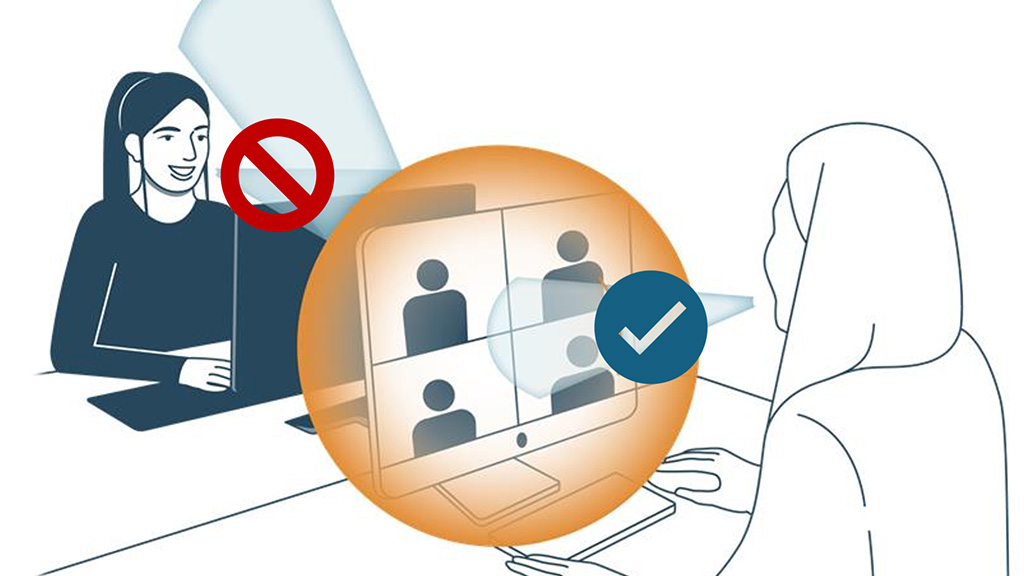
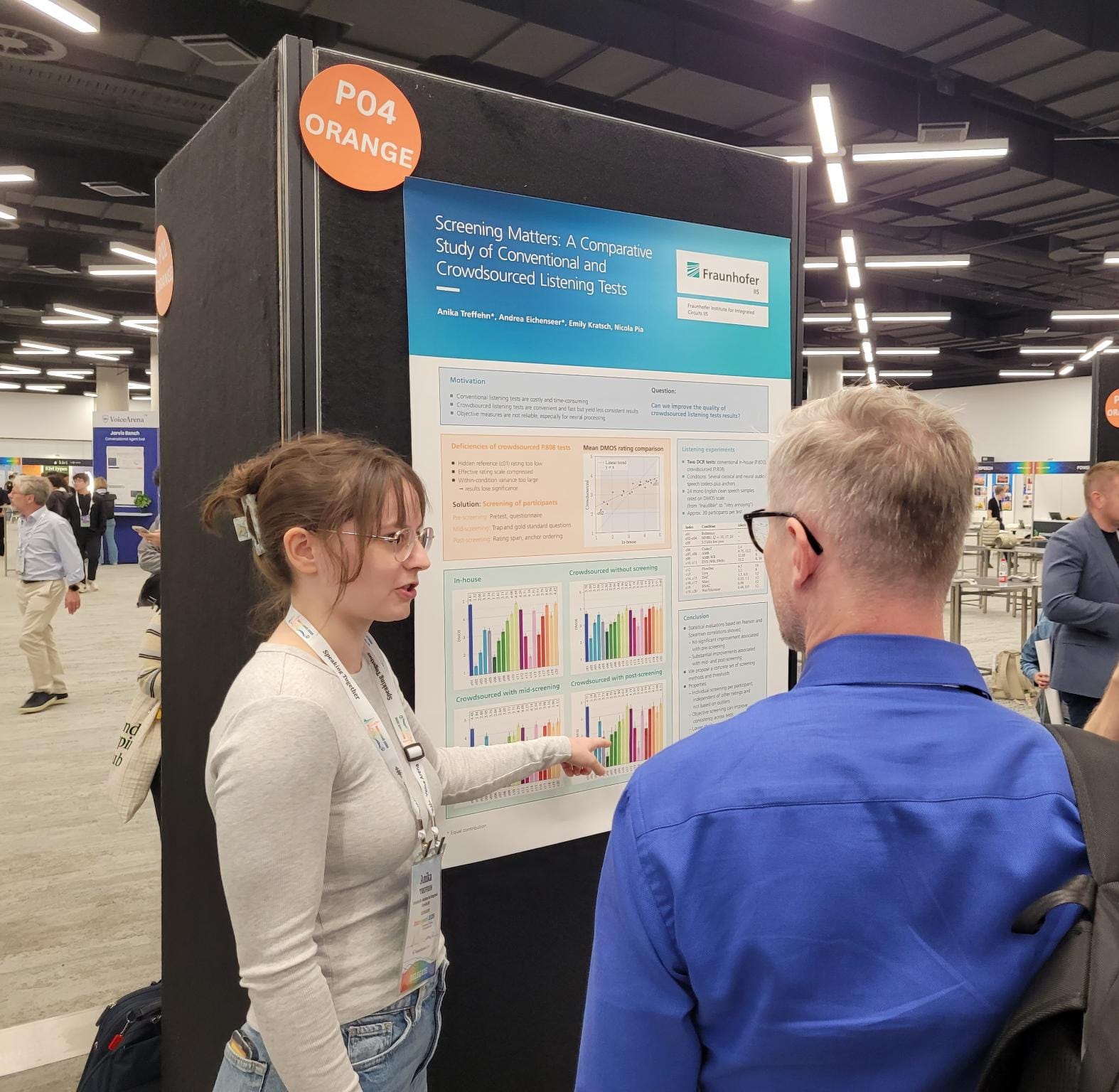
My own research examined whether crowdsourced listening tests can produce results comparable to those of conventional laboratory studies. Such tests are important for assessing speech quality, but they can be costly, particularly when reliable and carefully screened data is required.
The study showed that new quality-control methods, including anchor ordering and rating-span checks, can substantially improve the reliability of crowdsourced results. Combined with attention checks and questions with known answers, these methods make it possible to conduct cost-efficient and largely unbiased evaluations that approach the quality of laboratory tests.
Exchange, new perspectives and experiencing Australia
Beyond presenting our posters, we valued the opportunity to exchange ideas with experts from academia and industry, meet researchers working on similar topics, and engage in in-depth discussions. The conference also offered insights into a broad range of linguistic and application-oriented aspects of speech and language technology.
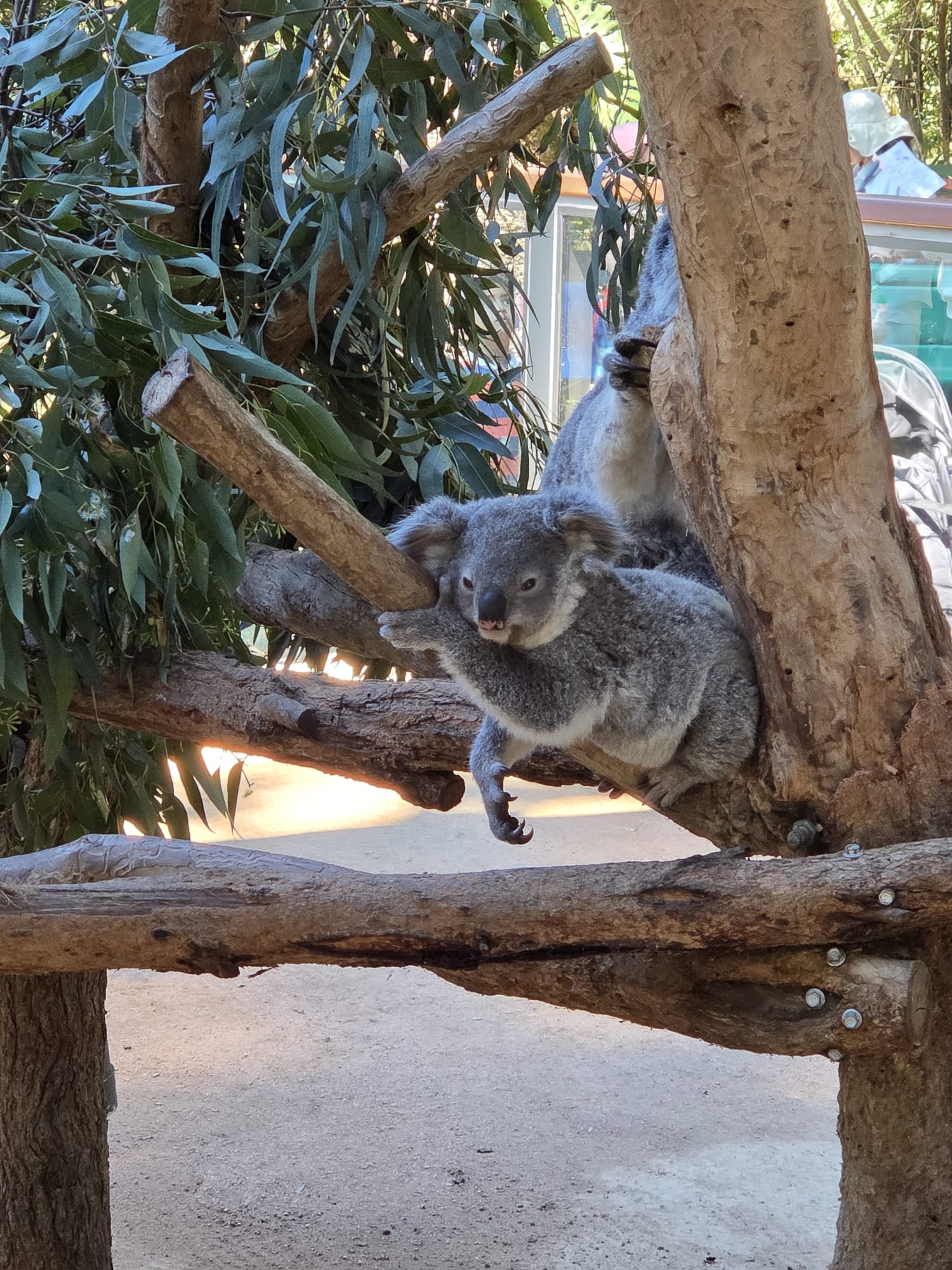
In addition, the trip allowed us to experience Australia’s culture and landscape, strengthen personal connections through social events, and even meet one of the country’s most distinctive residents: a koala. 🐨 Interspeech 2026 was therefore much more than a scientific conference – it combined knowledge exchange, networking and the experience of a fascinating country.
IWAENC 2026 – Intelligibility Prediction Using Speech Foundation Models
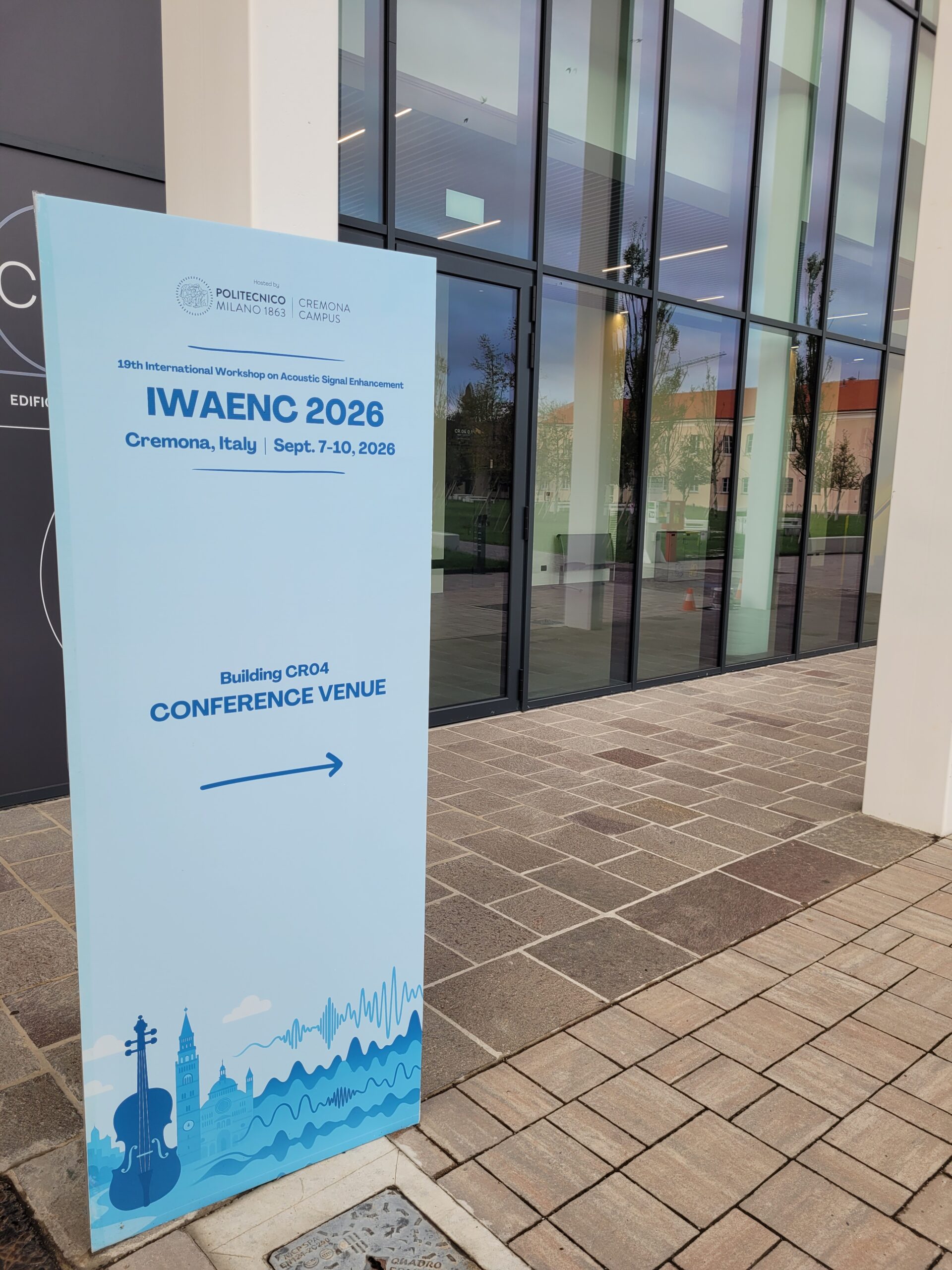
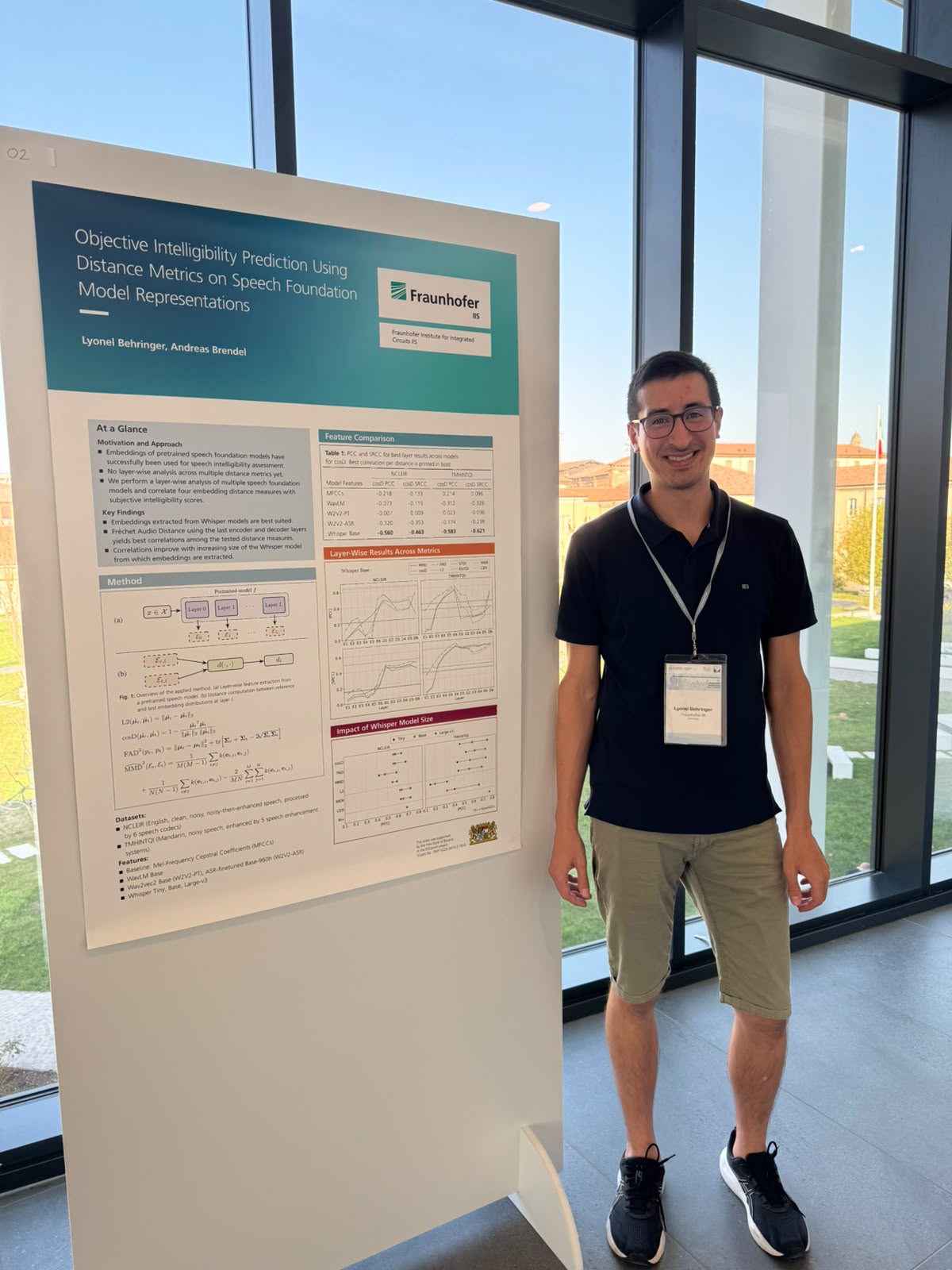
In September, Lyonel attended the 19th International Workshop on Acoustic Signal Enhancement (IWAENC) in Cremona, Italy, a leading event for advancements in acoustic signal processing.
Lyonel presented the paper titled “Objective Intelligibility Prediction Using Distance Metrics on Speech Foundation Model Representations.” Intelligibility assessment is an important manner of evaluating speech codecs. To reduce evaluation costs, reliable objective measures are desired. The study explored applying distance metrics on embeddings from speech foundation models, such as Whisper, for objective speech intelligibility prediction without retraining. The results showed that applying the Fréchet Audio Distance to Whisper embeddings yielded the best overall correlations with human intelligibility. Importantly, Whisper embeddings showed increased robustness across multiple datasets compared to Whisper’s discrete transcripts.
Authors: Anika Treffehn and Lyonel Behringer from Fraunhofer IIS