Neural audio codecs (i.e., machine learning-based algorithms for audio compression) are fundamentally changing the landscape of communications and compression applications. While these models deliver incredibly high quality at tiny bitrates, running them on real-world, resource-constrained devices like mobile phones and headsets remains a major challenge.
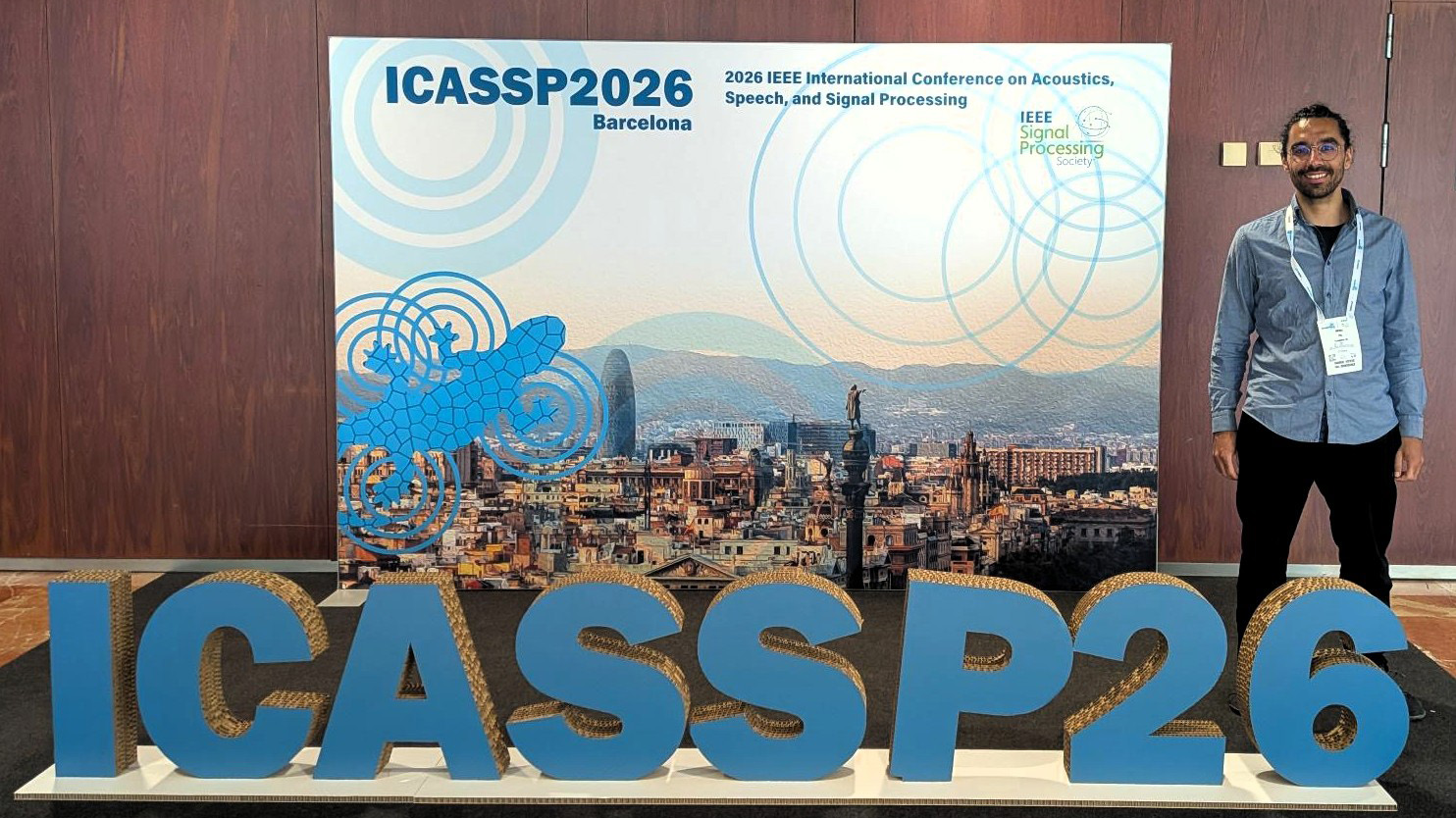
This past May in Barcelona, the inaugural Low-Resource Audio Codec (LRAC) Workshop at ICASSP 2026 tackled this exact challenge head-on. The event was an absolute milestone for the audio community, proving that the future of neural speech and audio coding relies on balancing high performance with strict computational limits. What made LRAC 2026 truly amazing was its sharp focus on real-world constraints: compute power, latency, and challenging acoustic scenarios.
An Inspiring Schedule and Expert Presentations
I was given the great honor of delivering a keynote at this event alongside fellow industry experts Jean-Marc Valin (Google) and Cullen Jennings (Cisco). Together, the keynotes and subsequent discussions painted a clear picture of the most important aspects of designing a codec for long-lived, standardized use in the real world, while highlighting the common pitfalls in current research approaches.
Beyond these foundational topics, the workshop featured the presentation of the LRAC Challenge 2025 results. My sincere congratulations go to the winning teams for the detailed presentations of their technologies. Several key takeaways can be extrapolated from their results:
- Evaluation is of paramount importance: The organizing team put tremendous effort into properly evaluating the subjective quality of the proposed systems. This is a critical area that current literature sometimes fails to address sufficiently, as I discussed at length during my keynote. Objective metrics struggle to capture the full picture and are simply not enough on their own.
- End-to-end VQ-GAN remains the architecture of choice: All challenge submissions utilized this approach, with each team introducing creative design choices across the encoder, quantizer, decoder, and training pipeline. While it may not be the newest paradigm, it consistently yields the best quality-to-complexity trade-off.
- Noise reduction can hurt intelligibility: Though this phenomenon is well-documented in existing literature, a direct comparison of the test results between Track 1 and Track 2 firmly reconfirmed it.
What’s Next?
The day concluded with an engaging panel discussion hosted by Prof. Minje Kim: “Are Neural Codecs Ready for Low-Resource Reality? Potentials and Pitfalls in the AI Era.” The overarching takeaway from the day was clear: a great deal of attention to detail is needed when building robust, tiny models capable of handling generalized signals in highly challenging acoustic environments. Nonetheless, this technology is extremely promising for real-world applications.
In conclusion, I would like to extend my gratitude to the organizers for putting together such a fantastic workshop and fostering these productive conversations. I eagerly look forward to future iterations of this workshop and challenge, and to witnessing their continued impact on advancing the field.

Author: Dr. Nicola Pia from Fraunhofer IIS
Header image c